

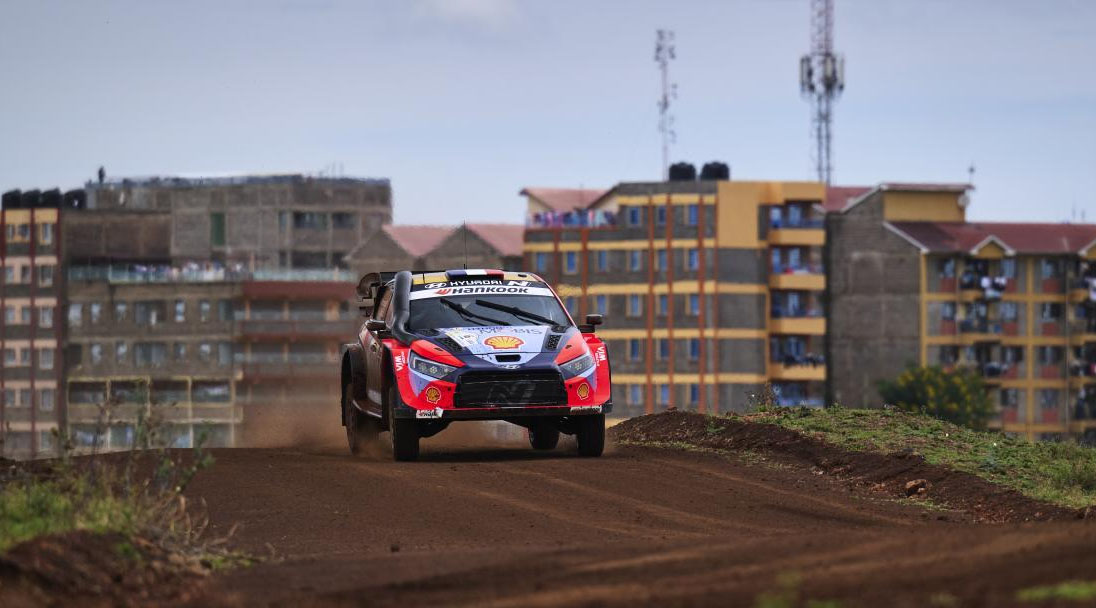
Photo Credit: Getty Images
Nairobi will not feature in the 2026 edition of the Safari Rally Kenya following confirmation by rally organisers that the World Rally Championship event will undergo a significant route change next year. The decision marks a major shift in the rally’s structure since its return to the global calendar four years ago and effectively ends the capital’s role in hosting part of the iconic motorsport spectacle.
The most notable change is the removal of the Kasarani Super Special Stage which has been a key highlight of the rally since 2021. The head to head stage staged in Nairobi had served as the ceremonial start of the Safari Rally and offered fans in the capital a rare chance to witness WRC action at close range. With Kasarani dropped from the route Nairobi will no longer host any competitive or ceremonial activities during the rally week.
Rally organisers have also confirmed that the overall event has been shortened by one day. In previous editions the rally activities began on Wednesday but in 2026 the shakedown stage has been moved to Thursday morning. The five kilometre Nawisa test will now serve as the official shakedown and final preparation for drivers and teams before competitive stages begin.
Competitive action will start on Thursday afternoon with crews tackling the familiar Camp Moran and Mzabibu stages around Naivasha. Much of the route closely mirrors the 2025 layout with organisers opting for continuity while streamlining the overall schedule. The service park and rally headquarters will remain based in Naivasha approximately one hundred kilometres from Nairobi reinforcing the region’s status as the rally’s operational hub.
Friday is set to be the longest and most demanding day of the rally. Crews will face eight stages including double runs of Loldia Kengen Geothermal Kedong and Camp Moran. The day will cover a total of 136.55 competitive kilometres and is expected to play a major role in shaping the overall standings due to its length and physical demands on both cars and drivers.
Saturday’s leg will feature six stages across the open savannah. Drivers will tackle Soysambu Elmenteita and Sleeping Warrior with each stage run twice. The day will cover a combined distance of 123 competitive kilometres and is traditionally known for its fast flowing sections and challenging terrain.
The rally will conclude on Sunday with four stages including repeat runs of Oserengoni and Hell’s Gate. The iconic Hell’s Gate Power Stage will once again decide the final standings and offer bonus championship points to the fastest crews. Its dramatic scenery and demanding conditions continue to make it one of the most anticipated stages on the WRC calendar.
Safari Rally Kenya will be the third round of the 2026 World Rally Championship season. The event is scheduled to run from March 12 to March 15 and will feature a total of 20 special stages covering approximately 350 kilometres. While the absence of Nairobi marks the end of an era the revised route signals a new chapter for the rally as organisers focus on efficiency competitive balance and the unique challenge of the Naivasha region.