

Photo Credit: Getty Images
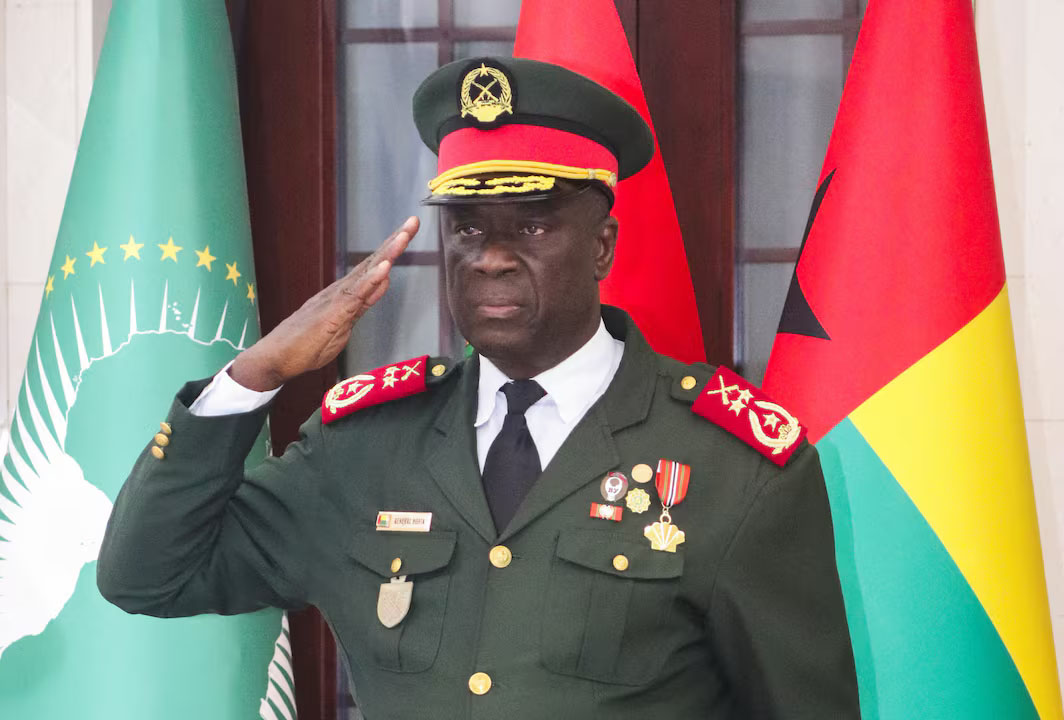
Guinea Bissau entered another turbulent phase when its military leadership installed Major General Horta Inta-a as transitional president, marking the latest in a long series of coups and attempted coups dating back decades. The intervention occurred shortly before provisional presidential election results were expected. The closely watched contest had pitted incumbent Umaro Sissoco Embalo against challenger Fernando Dias, who had gained significant momentum.
The High Military Command for the Restoration of Order claimed responsibility, stating that the coup was necessary to prevent what they described as a destabilisation effort involving political leaders and narcotics traffickers. Guinea Bissau has long been identified as a major transit point for cocaine shipped from South America to Europe, an issue that has profoundly shaped political dynamics and contributed to recurring instability.
Inta-a appeared on state television flanked by senior military officials and announced that the transition would last one year. Prior to the announcement, the capital experienced gunfire near the electoral commission headquarters and the presidential palace. Several political figures, including former Prime Minister Domingos Simões Pereira, were detained, prompting demonstrations that were dispersed with tear gas. Residents reported staying indoors as businesses closed and access to essential services became limited.
International organisations reacted swiftly. The African Union condemned the coup and demanded the release of detained officials. ECOWAS convened an emergency virtual meeting, bringing together several regional heads of state. The European Union echoed calls for constitutional order and urged authorities to continue the electoral process without further delay. Concerns heightened when election observers, including former Nigerian President Goodluck Jonathan, were initially unreachable.
Supporters of Dias accused Embalo of orchestrating a false coup attempt to halt the election, though Embalo left the country following diplomatic intervention. Dias' coalition demanded the immediate release of election results and the restoration of political order. Analysts argue that any transitional government will struggle to address the deep structural challenges linked to narcotics trafficking and historical instability.
The future of Guinea Bissau now depends on whether the transitional leadership maintains its promised timeline and whether regional and international pressure can support a return to democratic governance. As the nation confronts familiar uncertainty, observers remain cautious but hopeful that the coming months may offer clarity on its political direction.