

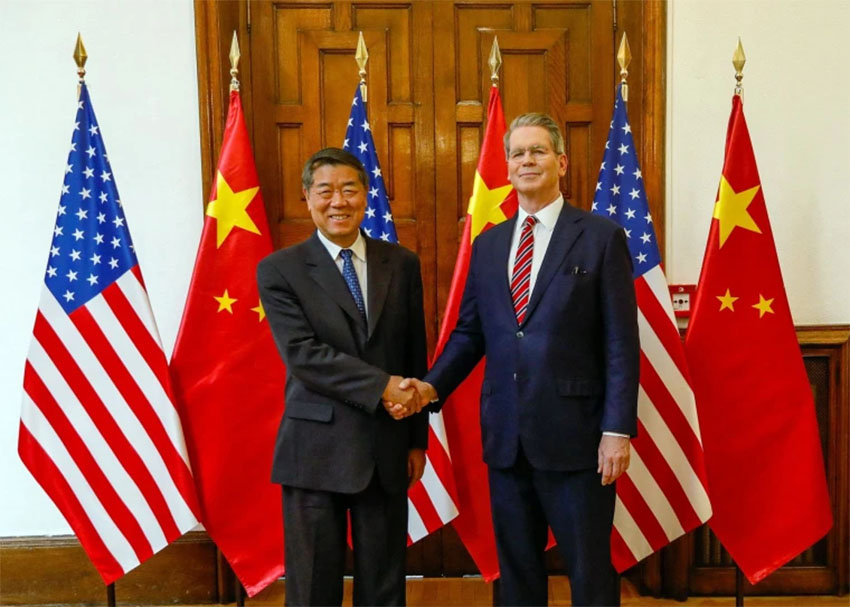
Photo Credit: Getty Images
A "framework" agreement has been reached between the US and China that could lead to US ownership of TikTok's American operations, according to the US Treasury Secretary. Scott Bessent indicated that this deal was forged during trade discussions in Madrid, adding that Presidents Trump and Xi Jinping were expected to finalize it on Friday. While the US side was optimistic, China cautioned that any final agreement must safeguard the interests of Chinese companies.
A deadline is looming for the Chinese owner of TikTok to find a buyer for its American operations or face a shutdown and ban in the US.
Bessent announced the "framework" deal on the second day of negotiations between the US and China aimed at ending a trade war. He said the threat to shut down the social media site in the US had persuaded Chinese negotiators to drop demands for reduced tariffs as part of any deal to sell TikTok's US arm.
The agreed upon commercial terms would protect US national security interests, he added.
US trade representative Jamieson Greer, part of the US delegation in Madrid, said the deal struck was "subject to the leaders' approval", but added his team was "not... in the business of having repetitive ban extensions".
China's top trade negotiator, Li Chenggang, said his country would not reach a deal with the US at the expense of its own principles and Chinese companies' interests. Its leadership would review any deal before it was agreed, he added.
In January, the US Supreme Court upheld a law passed in April 2024, banning the video-sharing app unless its parent company ByteDance sold its US division.
The US Justice Department has said that TikTok's access to data on American users poses "a national-security threat of immense depth and scale". ByteDance has repeatedly insisted that its US operations are fully independent and no data has been shared with the Chinese government. The company argued that the ban would violate free speech protections for its 170 million US users.
TikTok went dark for a day in January after the law came into effect, before Trump intervened and issued a 75-day postponement.
The deadline for a sale has since been extended three times, and the latest delay to the ban is due to end on 17 September.